
Trump Justice Department Busts Massive Student Aid Fraud Ring, Seizes $750,000 Linked to Kenyan Network
Federal authorities have uncovered an international fraud operation accused of stealing hundreds of millions of dollars from American student financial aid programs, announcing criminal charges against five defendants and the seizure of more than $750,000 in cryptocurrency connected to a network operating in Kenya.
The Justice Department revealed the findings Thursday as part of Operation Ghostbusters, a nationwide investigation targeting criminals who allegedly used stolen American identities to enroll fictitious students in colleges and universities before collecting federal grants and student loan payments.
Investigators say the operation exploited weaknesses in financial aid verification systems, allowing criminals to divert taxpayer-funded education assistance into personal bank accounts and eventually transfer the proceeds overseas.
The investigation has already identified more than $32 million in confirmed losses associated with similar schemes, while federal officials estimate that the broader fraud could exceed $200 million.
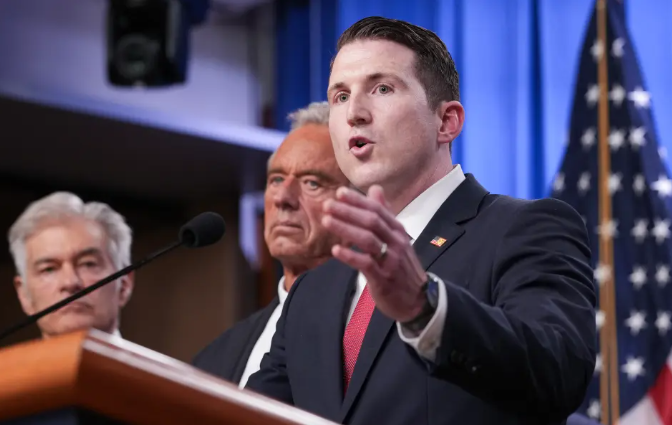
Assistant Attorney General Colin McDonald, who leads the Justice Department’s National Fraud Enforcement Division, announced the charges during a news conference in Alexandria, Virginia.
McDonald described the operation as a coordinated effort to exploit programs intended to help Americans pursue higher education.
Federal investigators say the scheme began operating as early as 2021, during the Biden administration, and continued for several years before the latest enforcement actions.
The fraud involved creating Federal Student Aid accounts using personal information stolen from American citizens who had never applied to the institutions listed in the applications.
Once the fraudulent applications were approved, colleges received tuition payments and the remaining financial aid funds were distributed as refunds.
Those refunds were then deposited into accounts controlled by individuals participating in the scheme.
According to prosecutors, American-based intermediaries known as money mules collected portions of the proceeds before transferring the remaining funds to accomplices overseas.
In one particularly unusual development, investigators traced stolen education funds to individuals in Kenya associated with a purported safari company.
Three defendants in New Jersey have been charged in connection with that portion of the investigation.
Mabed Patricia Utate-Alberto, Patricia Arisleydi Perez and George Arturo Alfau Mendez allegedly participated in a conspiracy that sought approximately $1.5 million in federal student aid.
Prosecutors say the defendants used domestic bank accounts to receive payments generated through fraudulent financial aid applications.
After collecting their shares, they allegedly transferred the remaining proceeds to associates in Kenya.
Federal authorities have arrested all three defendants.
Two additional alleged participants remain in Kenya, where investigators are working with local law enforcement officials to pursue further action.
The Justice Department said the overseas participants were associated with a purported Kenyan safari business, illustrating how criminal networks can use seemingly legitimate commercial operations to move stolen government funds.
A separate investigation in Virginia uncovered another alleged participant accused of handling approximately $1.4 million in fraudulent student aid payments.
According to federal prosecutors, the Kenyan national received more than 700 financial aid refund deposits through multiple bank accounts.
The deposits totaled approximately $1.44 million.
Investigators allege that the defendant subsequently conducted thousands of financial transactions, transferring at least $1.3 million through accounts in the United States and Kenya.
A federal grand jury returned an indictment in that case on October 21, charging conspiracy to commit wire fraud and student aid fraud.
Another case in Nebraska involves Kenyan citizen Francis Mogambi, who was indicted on October 19 on five counts of theft of government money and five counts of aggravated identity theft.
Prosecutors allege that Mogambi worked with accomplices in Kenya between November 2025 and May 2026 to obtain federal education funds using stolen American identities.
According to court documents, Mogambi retained approximately 30% of the stolen proceeds and sent the remaining money to his overseas associates.
Investigators also allege that he attempted to recruit another individual into the operation.
Federal authorities say Mogambi discussed earning approximately $2,000 per week through the scheme and expressed interest in establishing a business that would allow him to cash larger checks while avoiding taxes.
Mogambi entered the United States in May 2024 after receiving a Diversity Visa through the federal immigration lottery program.
He subsequently obtained lawful permanent resident status.
Following his arrest, a federal judge ordered him detained pending trial, citing concerns about his potential failure to appear and the risk he posed to the public.
The case has drawn attention to the intersection of identity theft, immigration enforcement and government benefit fraud.
Federal officials emphasized that the alleged scheme was not limited to criminals simply submitting fraudulent applications.
Investigators discovered that participants sometimes maintained the appearance of legitimate enrollment by completing assignments and creating fake classroom activity.
According to the Justice Department, some operators used advanced artificial intelligence tools to complete coursework and maintain fraudulent student profiles across multiple academic terms.
Those techniques allowed fictitious students to appear active in online classes, potentially delaying detection by educational institutions.
The fraud also created serious consequences for Americans whose identities were stolen.
Some victims discovered that they had supposedly attended colleges hundreds or thousands of miles away, despite never enrolling in those institutions.
Others found federal student loans attached to their identities, potentially exposing them to repayment demands and damage to their credit records.
McDonald described the experience of one victim who graduated from high school and immediately entered the workforce to support his family.
The individual never attended college or applied for student assistance, yet investigators discovered that someone had used his identity to obtain education funding.
The Justice Department said such cases demonstrate how the scheme harmed both taxpayers and innocent Americans whose personal information was misused.
The investigation has expanded significantly since federal authorities began tracing the fraudulent applications.
Operation Ghostbusters now includes more than 40 active cases across 26 FBI field offices and more than 20 U.S. attorney’s offices.
Investigators have also identified 830,840 potentially fraudulent Federal Student Aid identification accounts associated with nearly $130 million.
Federal authorities recommended that the Department of Education disable those accounts to prevent additional improper payments.
The Trump administration says its broader anti-fraud efforts have already prevented more than $2 billion in attempted student aid theft.
Education Department Under Secretary Nicholas Kent credited President Trump and Education Secretary Linda McMahon with strengthening protections against fraudulent financial aid applications.
Kent argued that every dollar diverted into a criminal operation represents money unavailable to students who genuinely need assistance.
The administration has also criticized financial aid oversight practices during the Biden presidency.
Kent alleged that previous officials had disabled important fraud detection safeguards, leaving taxpayer-funded programs vulnerable to organized criminal networks.
Those allegations have become part of the administration’s broader effort to strengthen verification requirements and identify improper government payments.
Meanwhile, federal investigators have pursued the money trail beyond American borders.
In September, Justice Department representatives traveled to Kenya to coordinate with law enforcement authorities on extradition, prosecutions and the recovery of stolen funds.
Working with Kenyan investigators, American authorities subsequently seized more than $750,000 in cryptocurrency linked to an individual associated with the alleged fraud network.
The Justice Department described the operation as the first international seizure of its kind involving its National Fraud Enforcement Division and Kenyan authorities.
The cryptocurrency recovery represents only a portion of the suspected losses, but officials say it demonstrates their ability to follow stolen taxpayer funds across international financial systems.
The FBI’s Criminal Division is continuing to coordinate with the Department of Education and federal prosecutors to identify additional suspects and recover missing funds.
Assistant Director Heith Janke said investigators intend to trace every available financial lead and pursue individuals responsible for exploiting federal assistance programs.
The Justice Department has also indicated that additional charges could follow as investigators examine the wider network.
The five defendants currently facing charges are presumed innocent unless proven guilty in court.
The allegations nevertheless expose substantial vulnerabilities in a federal financial aid system responsible for distributing billions of dollars to American students every year.
By using stolen identities, fraudulent enrollments, artificial intelligence and international money transfers, the alleged conspirators were able to exploit programs designed to expand access to education.
For the Trump administration, Operation Ghostbusters represents a major enforcement initiative targeting fraud against American taxpayers.
With hundreds of thousands of suspicious financial aid accounts identified and investigations continuing across the country, federal officials say the crackdown is far from over.